
RV Leveling Block Calculator
Work out how many leveling blocks a wheel needs from the rise height and your block size. Includes the stacking rules that keep the support safe.
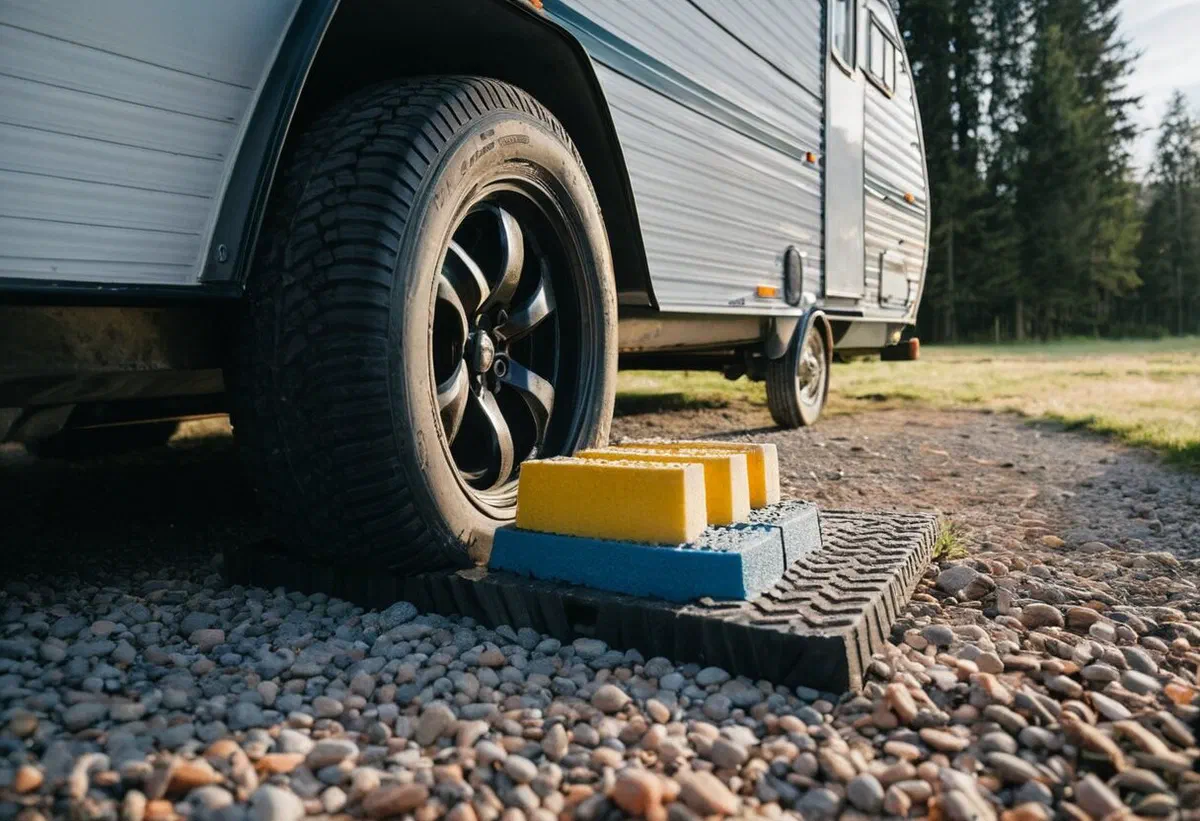
The number of blocks is just the rise divided by the block height, rounded up to a whole block. The judgement is in measuring both accurately, and in knowing when the answer means you should move rather than stack higher.
Work it out
—
Measure one block rather than trusting the nominal size — stacked blocks rarely add up to exactly their stated height. Keep the stack within your block manufacturer's limit.
Why round up
You cannot use half a block, so the stack ends up slightly taller than the tilt requires. That is normal and safe within the block manufacturer’s limit — but a big overshoot means the blocks are too coarse for the correction you need, or that the pitch is too steep for the site.
Getting the rise right
The rise is the amount this particular wheel has to come up for the RV to sit level. Two ways to get it:
- Measure the tilt directly. Qorvan RoamLevel reports the height needed for each wheel position, so you do not have to convert an angle yourself.
- Work it out from a spirit level. The rise is the gap under the low end of a level once the bubble is centred, measured at that end.
Small errors here matter less than they sound, because rounding up to a whole block absorbs them. What matters more is putting the blocks under the right wheel — see how to level an RV.
Stacking rules that are not optional
- Stay within the block manufacturer’s limit. Stacks lose stability as they grow.
- Support the whole contact patch. The tyre must sit fully on the stack, never on an edge or corner.
- Put blocks on firm ground. On soft grass or mud they sink or slide, which is worse than an off-level RV.
- Chock the wheels that stay on the ground. Blocks raise one side; they do not stop the RV rolling. See the parking and leveling safety checklist.
- Drive up slowly, stopping when the app says level. Do not try to hit a precise block count by momentum.
This calculator gives guidance only. It does not replace your RV manufacturer’s instructions, your block manufacturer’s limits, or your own judgement about whether a pitch is safe to occupy. Do not use leveling blocks to compensate for a site that is too steep.
Where an app fits in
The blocks do the raising. Deciding which wheel and how far is the part that is awkward to do by eye — which is what a leveler like Qorvan RoamLevel handles, reading tilt and reporting the height and block count for each position. See also leveling blocks vs ramps if you are still deciding what to carry.
Frequently asked questions
How do I know how much rise a wheel needs?
Should I use the nominal block height or measure it?
What if the calculator says I need a very tall stack?
Do I need blocks under both wheels on an axle?
Sources
- Qorvan RoamLevel App User Manual — QORVAN