
How to Level an RV
A step-by-step guide to leveling a travel trailer, fifth-wheel or motorhome — choosing blocks, reading tilt, driving onto blocks and checking you're level.
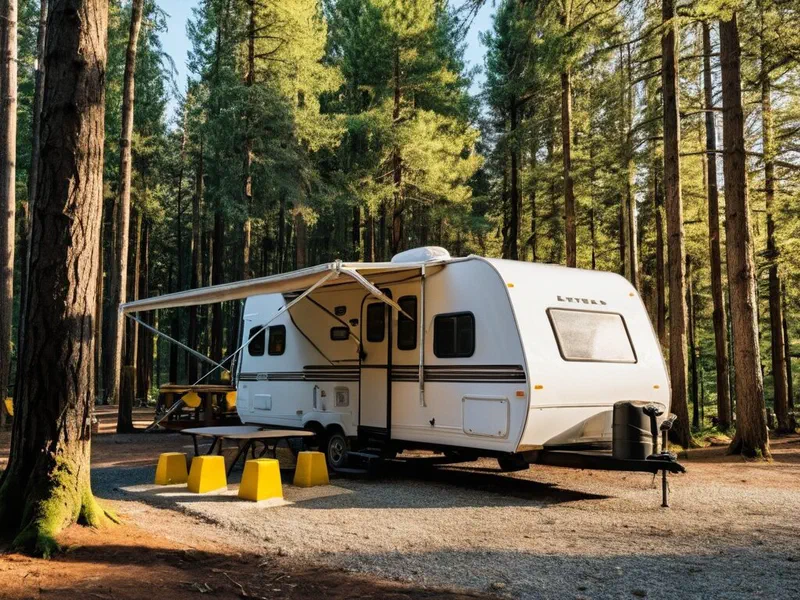
Leveling an RV means raising the low wheels until the coach sits flat side to side and front to back. A level RV is more comfortable to live in, doors and slides work as intended, and appliances such as absorption refrigerators run as designed.
Leveling, stabilizing and supporting aren’t the same
- Leveling raises one side or end so the RV sits flat.
- Stabilizing reduces rocking once you’re level (stabilizer jacks).
- Supporting carries weight, for example a tongue jack or landing gear.
Mixing these up is the most common beginner mistake. Level first, then stabilize.
What you need
- Leveling blocks or ramps suited to your RV — interlocking blocks, travel-trailer blocks, fixed-height step ramps or curved ramp levelers
- Wheel chocks
- A way to read tilt: a bubble level, a phone app, or a dedicated RV leveler
Step by step
- Park on the flattest spot available and note which way the site slopes.
- Read the tilt side to side and front to back.
- Work out which wheels to raise and by how much. On the low side, stack blocks to roughly the height difference.
- Place the blocks directly in front of (or behind) the tires you need to raise.
- Drive on slowly with a spotter if possible, and stop when you’re centered on the blocks.
- Re-check the tilt. Adjust by adding or removing a block if needed.
- Chock the wheels before unhitching or extending anything.
- Level front to back (towables) with the tongue jack or landing gear, then lower stabilizers.
Making it faster
Repeatedly climbing in and out to check a bubble level is what makes leveling slow. A Bluetooth leveler mounted inside the RV can read both axes and convert them into block heights for each wheel, so you know where to put blocks before you start.
No leveling tool replaces wheel chocks, your RV’s braking and stabilizing equipment, or the manufacturer’s instructions. Never work under or beside a vehicle that isn’t secured.
Frequently asked questions
Do I level side-to-side or front-to-back first?
Are stabilizer jacks for leveling?
Sources
- Qorvan RoamLevel App User Manual — QORVAN