
Radon in the Bedroom
You spend a third of your life in a bedroom. Learn how radon behaves there, how to test it properly and why long exposure in sleeping hours matters.
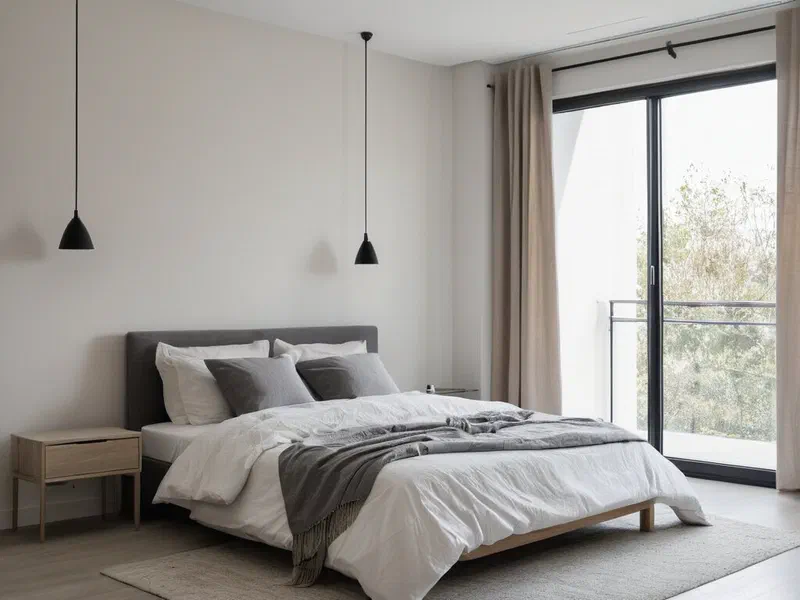
Radon risk is dose over time. You spend roughly a third of your life asleep, so the air in your bedroom contributes more to your long-term exposure than a room you pass through for a few minutes a day.
Where bedrooms fit into the picture
Radon usually falls off with height: a first-floor bedroom above a vented crawl space often reads lower than a basement bedroom directly above the soil. But stack effect and HVAC can move soil gas upward, and a closed bedroom door at night slows air exchange.
Testing a bedroom
Follow the same rules as any other room — place the detector around 20 inches or higher above the floor, away from windows, doors and vents — and test the room in its normal condition. That means the door and window settings you actually sleep with.
If you are using a short-term kit, keep the house closed up for the test period, as the instructions require. A continuous monitor handles this naturally: it records how the room behaves at night, in winter and after ventilation changes.
Why night readings can be higher
Levels frequently peak overnight: outdoor temperatures drop, the house is sealed, and heating or exhaust fans can increase the pressure difference that pulls soil gas indoors. See why radon levels change for the mechanics.
If a bedroom sits on the lowest lived-in floor, it is one of the most important rooms to test — and one of the best places to keep a continuous monitor.
Frequently asked questions
Is radon higher in bedrooms?
Should I sleep with a window open to reduce radon?
Sources
- A Citizen's Guide to Radon — U.S. EPA
- Radon and health (fact sheet) — World Health Organization