
Radon in the Basement
Basements usually have the highest radon levels in a house. Learn why, what a basement reading means, and how to test it properly.
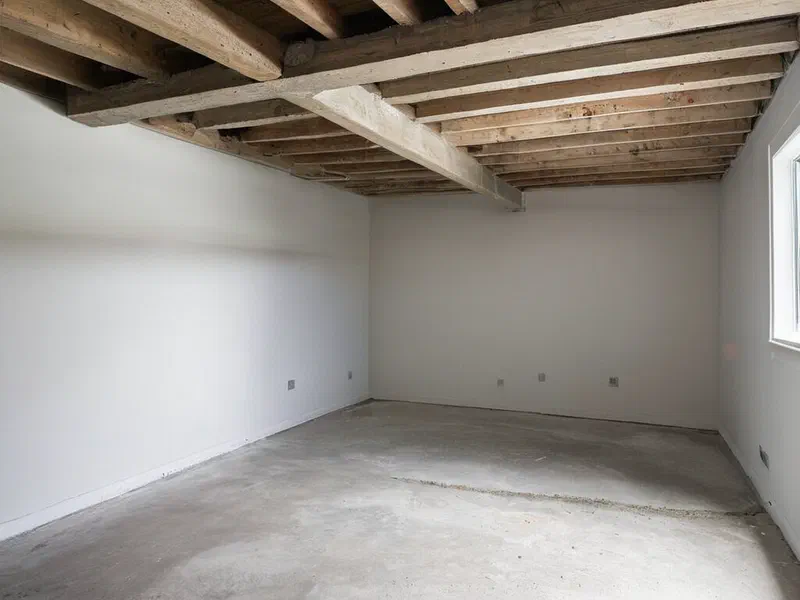
Basements usually have the highest radon levels in a house. Radon rises from uranium in soil and rock, and the basement is closest to the soil — with foundation cracks, floor joints, sumps and utility penetrations giving gas an easy route in.
Why the basement reads higher
- Proximity to the source. Soil gas enters at or below the foundation.
- Air pressure. A house is usually slightly depressurised relative to the soil, so gas is drawn in at the lowest point.
- Less air movement. Unfinished basements often have less ventilation than living areas.
Stack effect can still move radon upstairs, especially in winter when warm air rises through the house. A low basement reading does not guarantee low levels everywhere.
How to test a basement
Place the detector on the lowest lived-in level, about 20 inches or more above the floor, away from drafts, sumps and appliances. If you use the basement as a bedroom, office or family room, that is where the reading matters most.
If the basement is only storage and you never spend time there, test the lowest floor you do use — where to put a radon detector covers this in detail.
What to do with the result
The EPA recommends fixing a home at 4 pCi/L or higher, and considering it between 2 and 4 pCi/L. Sealing cracks helps but is not a fix on its own; see how to reduce radon.
Basement levels change with weather, season and how you heat and ventilate. A continuous monitor shows the trend; a single test shows one moment. Read why radon levels change for the drivers.
Frequently asked questions
Should I test the basement or the living room?
My basement reading is high but upstairs is low. Is that normal?
Do I need to fix my basement if nobody sleeps there?
Sources
- A Citizen's Guide to Radon — U.S. EPA
- Consumer's Guide to Radon Reduction — U.S. EPA