
Radon in a Crawl Space
Crawl spaces sit between the soil and your living space. Learn how radon moves through them and the mitigation methods used for crawl-space homes.
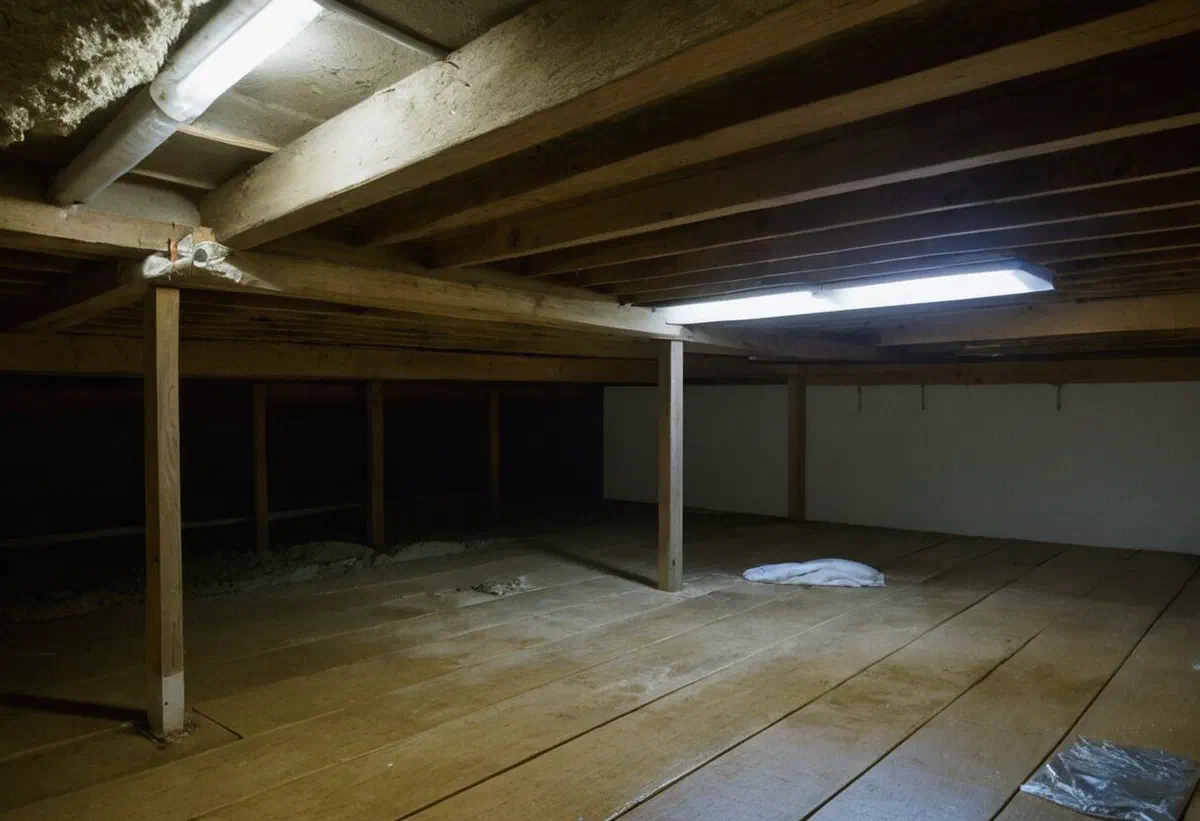
A crawl space sits between the soil and the floor above it, so it acts as a path for radon rather than a barrier. Soil gas collects under the house and can move up through gaps, plumbing penetrations and ductwork into living areas.
Why crawl spaces need attention
- Most crawl spaces are vented to the outside, which does not reliably dilute radon under the home.
- Gaps and unsealed penetrations in the floor above let soil gas into rooms.
- HVAC ducts and equipment located in the crawl space can draw in and circulate the air.
What to test
Test the lowest level where people actually spend time — a ground-floor bedroom or living room — following the same placement rules as any other test. Do not use a crawl-space measurement as your home’s radon level; it measures the source, not your exposure.
How mitigation works in crawl-space homes
The EPA’s guidance describes combining a sealed soil membrane with ventilation or sub-membrane depressurisation: a pipe and fan system that pulls soil gas from beneath the membrane and vents it above the roofline. Contractors often also seal floor penetrations and address duct leaks as part of the job. See how to reduce radon.
Because crawl-space soil gas can be drawn upward by pressure differences, a home with a crawl space often benefits from continuous monitoring after mitigation — so you can see if levels creep back up.
Frequently asked questions
Should I test inside the crawl space?
Does a vapour barrier stop radon?
Sources
- Consumer's Guide to Radon Reduction — U.S. EPA
- A Citizen's Guide to Radon — U.S. EPA